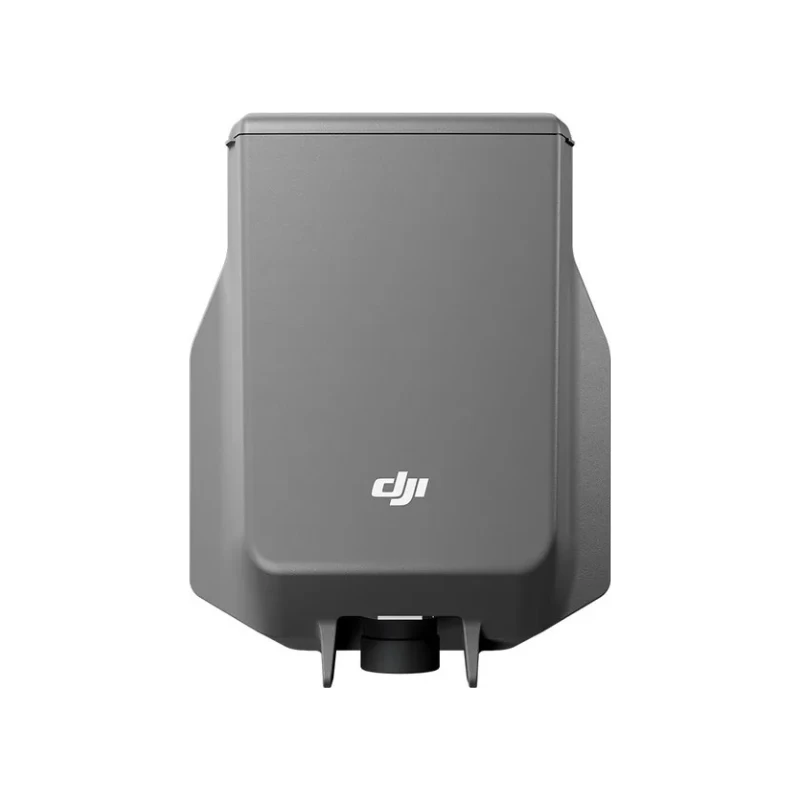
| Dimensions | 182×171×157 mm (L×W×H) (with bracket) |
|---|
| Weight | Approx. 935 g (with bracket) |
|---|
| Max Supported Takeoff Weight | 15.8 kg |
|---|
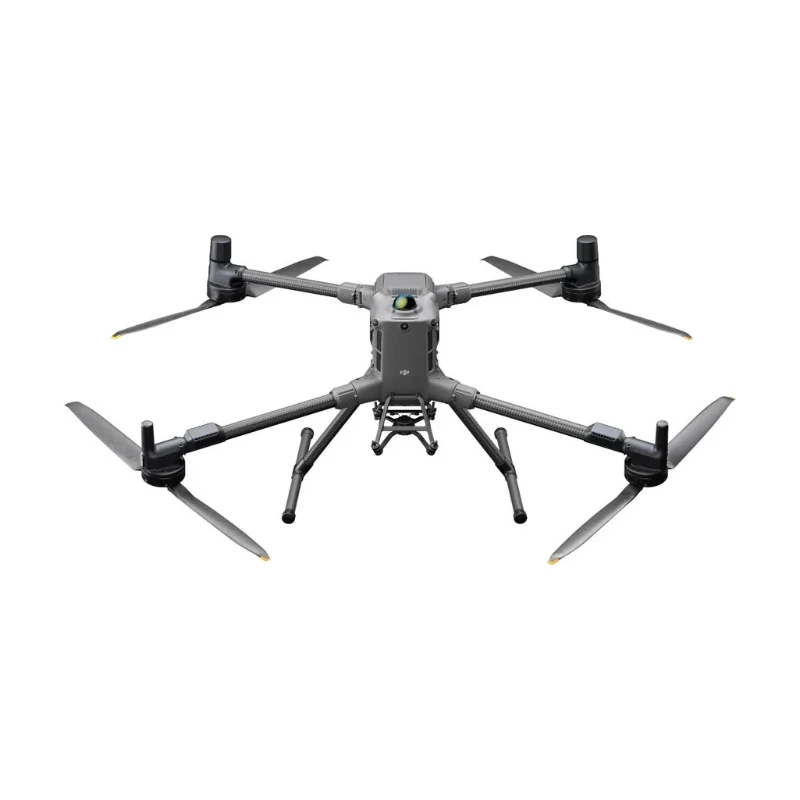
| Compatible Aircraft | DJI Matrice 400 |
|---|
| Operating Temperature | -20° to 50° C (-4° to 122° F) |
|---|
| Operating Altitude | 0 to 4500 m |
|---|
| Ingress Protection Rating | IP55Please follow the requirements stated in the IP55 protection rating instructions. Measured in a controlled environment. The IP rating is not permanently effective and may decrease due to product wear and tear. |
|---|
| Stabilized Descent Speed | ≤ 5 m/sMeasured in a windless environment at 25° C (77° F), at an altitude between 30 m and 500 m, with DJI Matrice 400 taking off at the max takeoff weight of 15.8 kg. Data is for reference only. Actual experience may vary depending on the environment, usage, and firmware version. |
|---|
| Effective Deployment Altitude | ≥ 30 m
The 30 m data was measured in a windless environment at 25° C (77° F), at an altitude below 500 m, with DJI Matrice 400 taking off at the max takeoff weight of 15.8 kg. Data is for reference only. Actual experience may vary depending on the environment, usage, and firmware version.The minimum effective deployment altitude of DJI AP100 Parachute is 30 m (the minimum vertical altitude required for the parachute to stabilize the aircraft's descent below 5 m/s). If deployed below 30 m, the parachute will still eject, but may not fully inflate to adequately slow the descent. Additionally, in some cases, auto-deployment may not trigger, requiring manual operation. Please fly with caution. For detailed features and trigger conditions, visit the official product page. |
|---|
| Automatic Deployment Response Time | ≤ 600 msMeasured in a controlled laboratory environment. With DJI Matrice 400 hovering and propellers spinning, this is the total time interval recorded from the triggering of the Flight Termination System (FTS) signal, through the confirmation of a complete rotor stop, to the triggering of the gas generator's electrical signal. Data is for reference only. Actual experience may vary depending on the environment, usage, and firmware version. |
|---|
| Canopy Material | Nylon |
|---|
| Manual Deployment | Supports Manual Deployment via App and FTS Deployment** FTS Deployment via DJI FlightHub 2 is supported in the following countries and regions: EU member states (Austria, Belgium, Bulgaria, Croatia, Cyprus, Czechia, Denmark, Estonia, Finland, France, Germany, Greece, Hungary, Ireland, Italy, Latvia, Lithuania, Luxembourg, Malta, Netherlands, Poland, Portugal, Romania, Slovakia, Slovenia, Spain, Sweden), the United Kingdom, Norway, Iceland, Switzerland, Liechtenstein, Serbia, and Georgia. For the Flight Termination System (FTS) interface, visit: https://fh.dji.com/fts/index.html#/. |
|---|
| Automatic Deployment | Supports Automatic Deployment triggered by flight anomalies* or Geocaging**
1. The aircraft is within a 10m radius of the Home Point, and its relative altitude is within 15 m above or below the Home Point.
2. With Cleaning Mode enabled, the aircraft is within a 10m radius of the Home Point, and its relative altitude is within 15 m above the Home Point.
** Geocaging is supported in the following countries and regions: EU member states (Austria, Belgium, Bulgaria, Croatia, Cyprus, Czechia, Denmark, Estonia, Finland, France, Germany, Greece, Hungary, Ireland, Italy, Latvia, Lithuania, Luxembourg, Malta, Netherlands, Poland, Portugal, Romania, Slovakia, Slovenia, Spain, Sweden), the United Kingdom, Norway, Iceland, Switzerland, Liechtenstein, Serbia, and Georgia.* The parachute will automatically deploy upon detecting abnormal aircraft attitude or speed. However, to mitigate the risk of damage to nearby equipment or property caused by close-range deployment, the automatic deployment will be disabled under either of the following conditions: |
|---|